
Matching UK Outerwear and Footwear to Your Routine
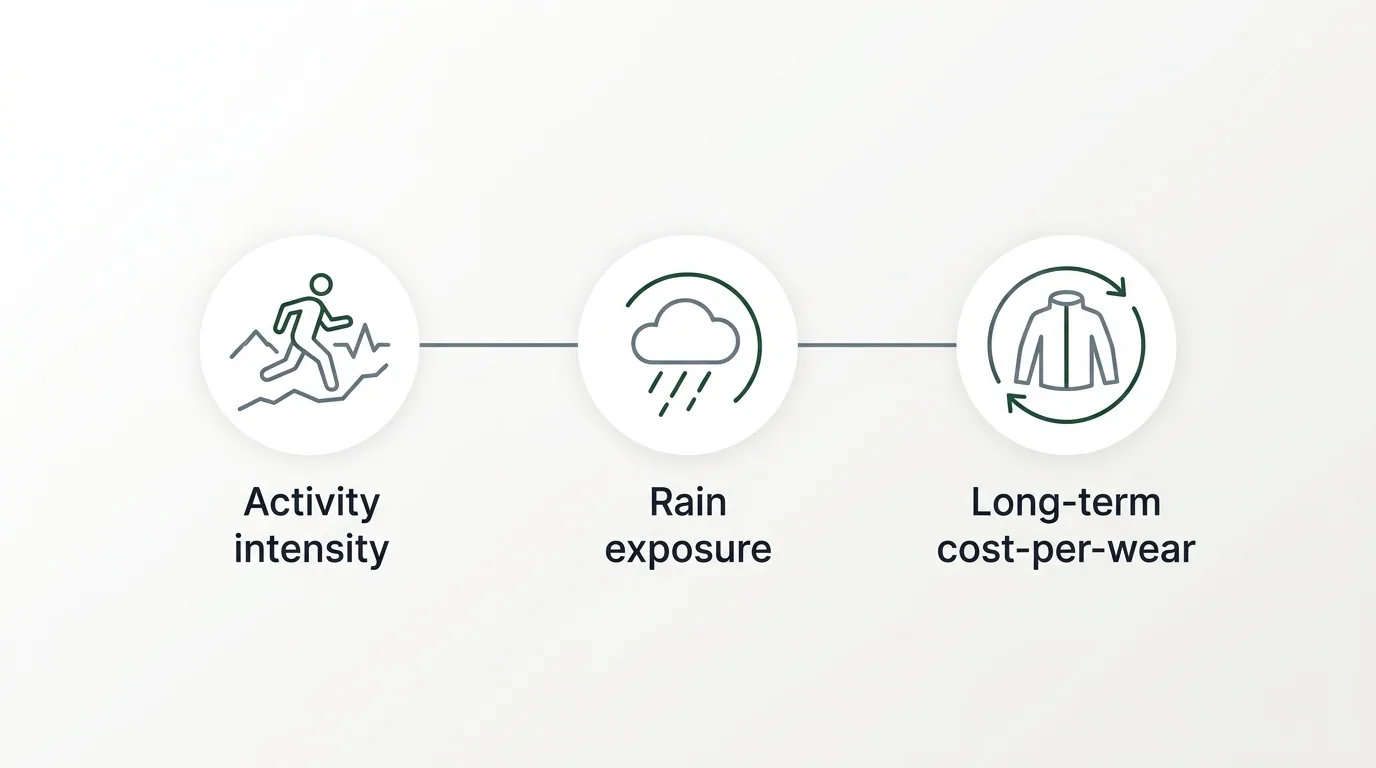
Choosing wet-weather kit for the United Kingdom rarely rewards buying the heaviest or most technical garment on the rail. Instead, strong long-term cost-per-wear starts with separating low-output routines—such as station commutes, dog walks, and everyday errands—from sustained high-output movement like trail running, brisk hillwalking, or multi-day backpacking.
A basic rain shell can keep precipitation off your shoulders when you are standing on a platform or walking at an easy pace, whereas sustained aerobic effort in persistent rain requires a waterproof-breathable hardshell engineered to manage moisture from both outside and inside the garment. Equally, an everyday commuter who values abrasion resistance and decades of service life often gets far better value from a repairable waxed cotton coat than from an ultralight running shell that was never intended for daily rucksack straps and urban wear.
Think of UK outerwear and footwear as a complementary system rather than a single do-everything purchase:
- Waterproof membrane shells handle sustained rain, wind, and higher-output outdoor movement where packability and moisture vapour transfer matter.
- Waxed cotton coats cover everyday town wear, wet commutes, and casual countryside walks with straightforward annual reproofing and factory repair pathways.
- Road-to-trail trainers bridge the gap between wet UK tarmac, canal towpaths, urban parks, and light trails so you do not wear out delicate trail lugs on pavement or slip on muddy shortcuts.
By matching fabric construction, repairability, and footwear build to your actual weekly routine—and factoring in whether you are willing to wash membranes or re-wax cotton regularly—you avoid paying for features you never use and extend the working life of every item in your wardrobe.
How Waterproof Membrane Shells and Fabrics Work
AI-generated generic editorial illustration — not a retailer product photo and does not depict the reviewed product or service. Editorial illustration supporting this section.
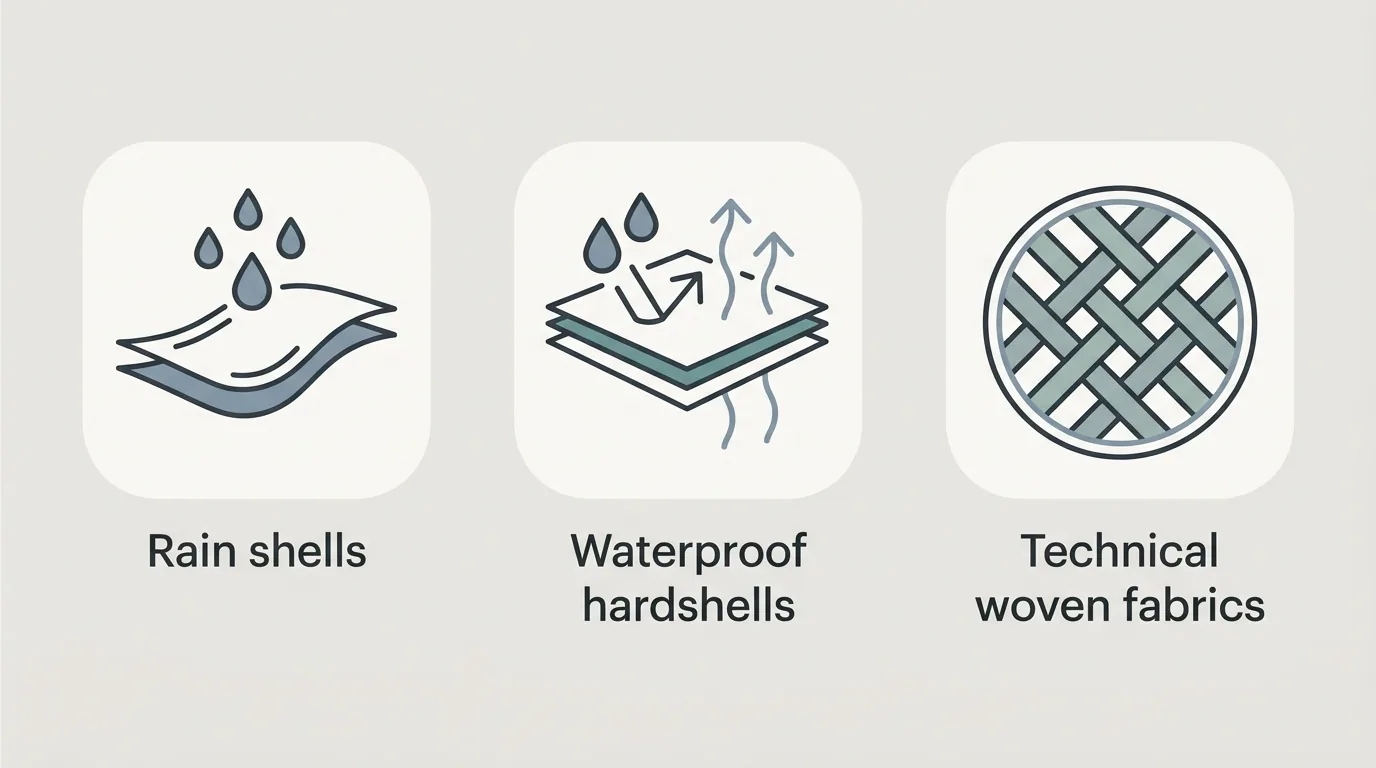
Not all waterproof jackets are built for the same job. OutdoorGearLab distinguishes between general rain shells—which are effective for keeping rain or snow out during stationary or casual activities—and waterproof-breathable hardshells engineered for sustained effort in inclement weather, where managing internal sweat vapour is just as important as blocking external rain.
When comparing technical shells, pay close attention to layer construction. Manufacturers almost always state whether a waterproof-breathable fabric is 2-layer, 2.5-layer, or 3-layer, and each architecture carries practical trade-offs:
- 2-layer constructions bond a waterproof membrane to an outer face fabric and rely on a separate hanging lining inside. They are commonly found in affordable rain protection aimed at general around-town wear and casual day hikes, trading extra bulk for everyday comfort.
- 2.5-layer constructions pair a face fabric and membrane with a thin protective print or coating on the inside instead of a full liner. This keeps weight and packed volume low, making 2.5-layer shells popular for ultralight emergency rain protection on day hikes, long-distance backpacking, and trail running.
- 3-layer constructions laminate the outer face fabric, waterproof membrane, and an interior backer fabric into one unified sheet. They are typically favoured in dedicated hardshells built for frequent, sustained activity in poor weather where durability and dependable moisture management are priorities.
Alongside established waterproof systems such as GORE-TEX, technical woven fabric specialists play a central role in UK mountain and running kit. Pertex, which has woven performance fabrics for outdoor use since 1979, produces distinct fabric families tailored to different balances of protection and breathability. Its documented properties span lightweight, windproof, downproof, water-resistant, and air-permeable performance across lines such as Quantum, Quantum Air, and Quantum Pro for lightweight wind and insulation shells, as well as Shield, Shield Air, and Shield Pro for waterproof-breathable outerwear, alongside Equilibrium and recycled NetPlus fabrics used in garments such as updated versions of the Rab Microlight Alpine Jacket.
Waxed Cotton Jackets and Long-Term Repairability
For UK commuters and everyday shoppers who spend more time walking to work, running errands, or strolling through parks than tackling exposed mountain ridges, waxed cotton offers a durable, repairable alternative to synthetic membrane shells.
Traditional waxed outerwear is defined by its fabric weight and finish. Barbour’s Classic 6oz waxed cotton is one of its oldest and most established wax weights: naturally hardwearing for regular wet-weather use, and designed to last even longer when re-waxed every year. For milder seasons or shoppers who prefer less bulk, Lightweight 4oz waxed cotton weighs roughly three-quarters of the classic weight while maintaining a resilient weather-resistant finish that responds well to regular care.
What makes waxed cotton particularly compelling for long-term cost-per-wear is its structured lifecycle support. Rather than treating a worn jacket as disposable, Barbour’s Wax For Life programme—rooted in the re-waxing and repair service introduced by Malcolm Barbour in 1921—supports three distinct routes for keeping a coat in service:
- DIY Re-Waxing: At-home Wax Care Kits and step-by-step guides allow owners to reproof either Classic 6oz or Lightweight 4oz jackets themselves once a year.
- Specialist Repair & Re-Wax: Owners can send worn garments to Barbour’s craftspeople in South Shields to repair damaged panels, cuffs, or seams and restore the waxed finish.
- Circular Upcycling (Re-Loved): When a jacket reaches the end of its time with its first owner, the Re-Loved programme upcycles old waxed coats so they can continue in use with a new owner.
In urban commuting and everyday UK wear, where abrasion from bags, turnstiles, and daily use can gradually wear down ultralight synthetic shells, a repairable 4oz or 6oz waxed coat often spreads its purchase price across many more seasons.
Insulation Layering and Breathability Trade-Offs
Every outerwear category involves trade-offs, and most buyer frustration in damp UK weather comes from pairing the wrong shell or midlayer with the wrong activity level.
Waxed cotton and entry-level rain shells excel at shedding casual rain, but they are noticeably bulkier and less breathable than dedicated multi-layer technical hardshells during sustained aerobic effort. Wearing a heavy waxed coat or a basic non-technical rain shell for brisk hillwalking or trail running traps internal heat and perspiration, leaving you damp from the inside even when no rain penetrates the exterior.
Midlayer insulation introduces a second set of moisture trade-offs under a shell:
- Standard down insulation offers high warmth for its weight, but down jackets are not waterproof. In persistent UK drizzle or high-humidity layering systems, moisture can compromise untreated down loft. Hydrophobic down is designed to help manage damp conditions better than untreated feathers, though it still requires a protective outer shell in sustained rain.
- Synthetic insulation, such as the PrimaLoft® variants used across Rab’s insulated range, is lightweight, breathable, and fast-drying. Options span active sheet insulation that responds to changing output levels during stop-start movement through to loose-fill synthetics engineered to mimic the structure of down. Some technical insulated pieces also incorporate heat-retention linings such as Rab’s TILT (Thermo Ionic Lining Technology) to improve warmth without adding heavy bulk.
Finally, neither technical membranes nor waxed finishes are maintenance-free. Dirt, body oils, and surface contamination reduce the breathability and water-shedding performance of technical shells over time, while waxed cotton gradually dries out in high-wear areas such as shoulders and sleeves. Factoring upkeep into your buying decision ensures your layering system continues performing beyond its first winter.
Choosing Road-to-Trail Trainers for Mixed UK Surfaces
AI-generated generic editorial illustration — not a retailer product photo and does not depict the reviewed product or service. Editorial illustration supporting this section.
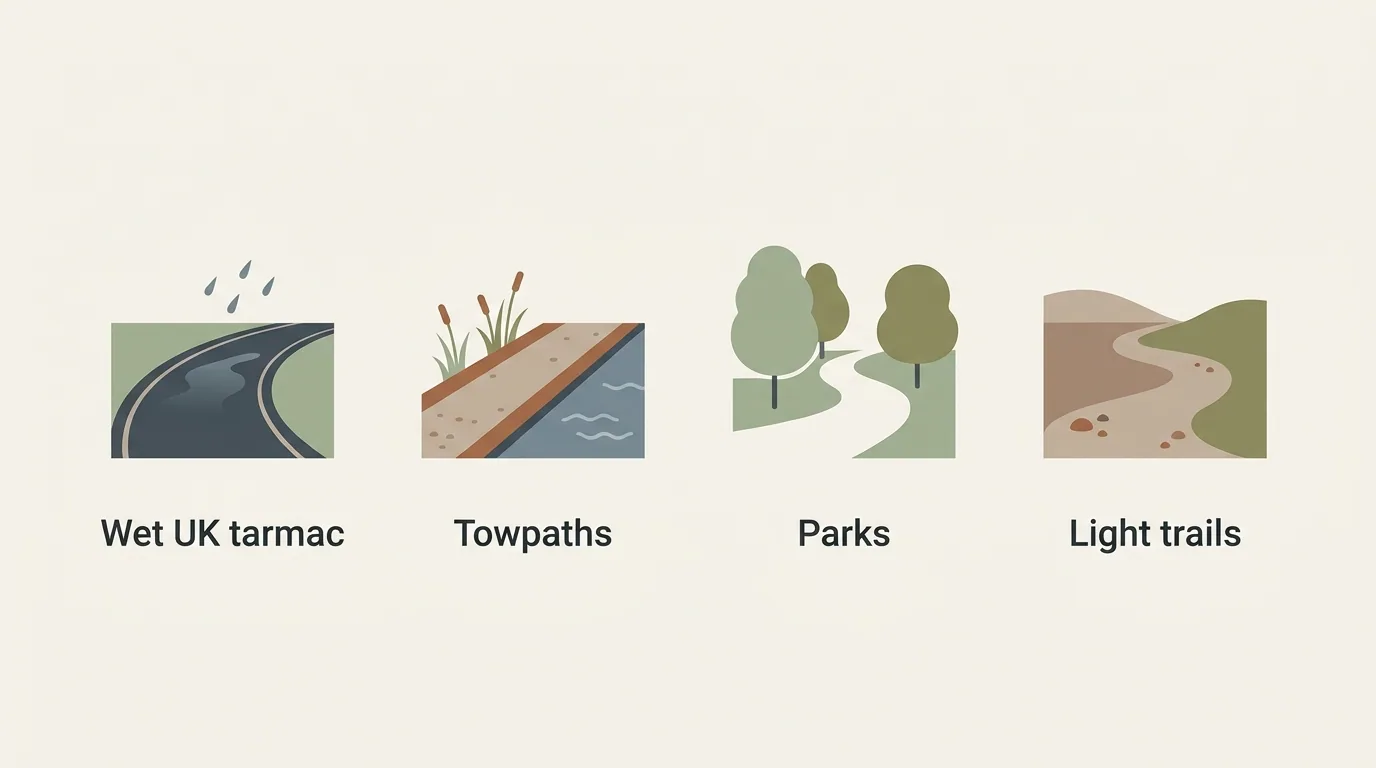
UK runners and active commuters rarely stay on one surface from door to door. A typical weekday run or brisk walk to the station might combine wet UK tarmac, grit-strewn canal towpaths, grassy municipal parks, and light woodland trails—conditions that reward well-chosen road-to-trail trainers.
Rather than relying on unverified marketing claims, evaluate road-to-trail footwear across three practical criteria:
- Outsole tread and wear balance: Look for a moderate lug pattern with broad enough rubber contact area to feel stable and predictable on slick pavements, while still offering enough bite for damp grass, gravel towpaths, and light mud. Overly aggressive trail lugs can feel unstable on wet tarmac and wear down quickly on daily road mileage, whereas smooth road outsoles lose traction as soon as you step onto a muddy park path.
- Upper construction and moisture management: Apply the same external-versus-internal moisture logic used when choosing running shells. Breathable non-membrane mesh uppers allow heat to escape during higher-output runs and drain and dry more readily if water enters over the collar in deep puddles. Waterproof-membrane uppers help block light rain, wet grass, and road spray during cooler commutes, but can feel warmer during sustained effort and take longer to dry once soaked inside.
- Fit and structural longevity: Long-term cost-per-wear depends heavily on how well the shoe holds its shape over months of mixed-surface use. Check for secure heel lockdown to prevent rubbing on uneven towpaths, enough toe-box room for natural foot splay on longer outings, and a resilient midsole and abrasion-resistant outsole rubber that will not break down prematurely on hard pavement.
Comparing Outerwear Categories by UK Use Case
Bringing technical shells, woven wind layers, waxed cotton, and midlayer insulation together clarifies which category fits your main UK routine and maintenance habits.
| Outerwear Category | Best-Matched UK Use Case | Weather Protection & Breathability | Packability & Weight | Upkeep & Service Life |
|---|---|---|---|---|
| 2-Layer Rain Shell | Around-town errands, casual day hikes | Reliable rain protection for low-to-moderate output; modest breathability | Bulkier due to hanging liner | Periodic washing; good everyday value |
| 2.5-Layer Shell | Ultralight day hikes, backpacking, emergency trail running | Waterproof protection with lighter weight; less durable than 3-layer for heavy daily abrasion | Highly packable and lightweight | Regular gentle washing to maintain coating and membrane |
| 3-Layer Hardshell (e.g., GORE-TEX, Pertex Shield) | Sustained hillwalking, exposed wet-weather activity | High waterproof protection engineered to manage both external rain and internal moisture | Moderate packability; robust face fabric | Routine technical washing supports multi-season durability |
| Pertex Wind / Air-Permeable Layers (e.g., Quantum, Equilibrium) | High-output trail running, breezy dry-to-damp outings | Windproof, lightweight, water-resistant, and air-permeable; not a full storm waterproof | Very lightweight and compact | Simple washing and repair via Pertex care guidance |
| Waxed Cotton (4oz & 6oz) | Urban commuting, everyday town and countryside wear | Hardwearing rain resistance for low-output wear; lower breathability for hard aerobic effort | Heavier and less packable (4oz is ~3/4 weight of 6oz) | Annual DIY re-waxing or factory Repair & Re-Wax; multi-decade potential |
| Synthetic Midlayer (e.g., PrimaLoft®) vs. Down | Damp active layering (synthetic) vs. cold dry stops (down/hydrophobic down) | Synthetic is breathable and fast-drying; down is not waterproof and needs a shell in rain | Both pack down well; down excels for warmth-to-weight | Manufacturer-specific washing and patching extend loft |
If your priority is a single coat for daily UK commuting and casual wear over many years, a repairable 4oz or 6oz waxed jacket or a durable 3-layer hardshell usually delivers stronger cost-per-wear than an ultralight 2.5-layer packable shell. Reserve ultralight packable shells and air-permeable Pertex layers for higher-output trail running and fast-moving hikes where weight and breathability outweigh daily abrasion resistance.
Compare UK waterproof shells, waxed jackets, and road-to-trail trainers
Aftercare Washing and Repair to Maximise Cost-Per-Wear
AI-generated generic editorial illustration — not a retailer product photo and does not depict the reviewed product or service. Editorial illustration supporting this section.
Even well-constructed outerwear loses performance prematurely if it is neglected. Because a quality hardshell or waxed coat is often the most expensive piece in a UK layering system, following manufacturer-backed aftercare is the simplest way to lower your long-term cost-per-wear.
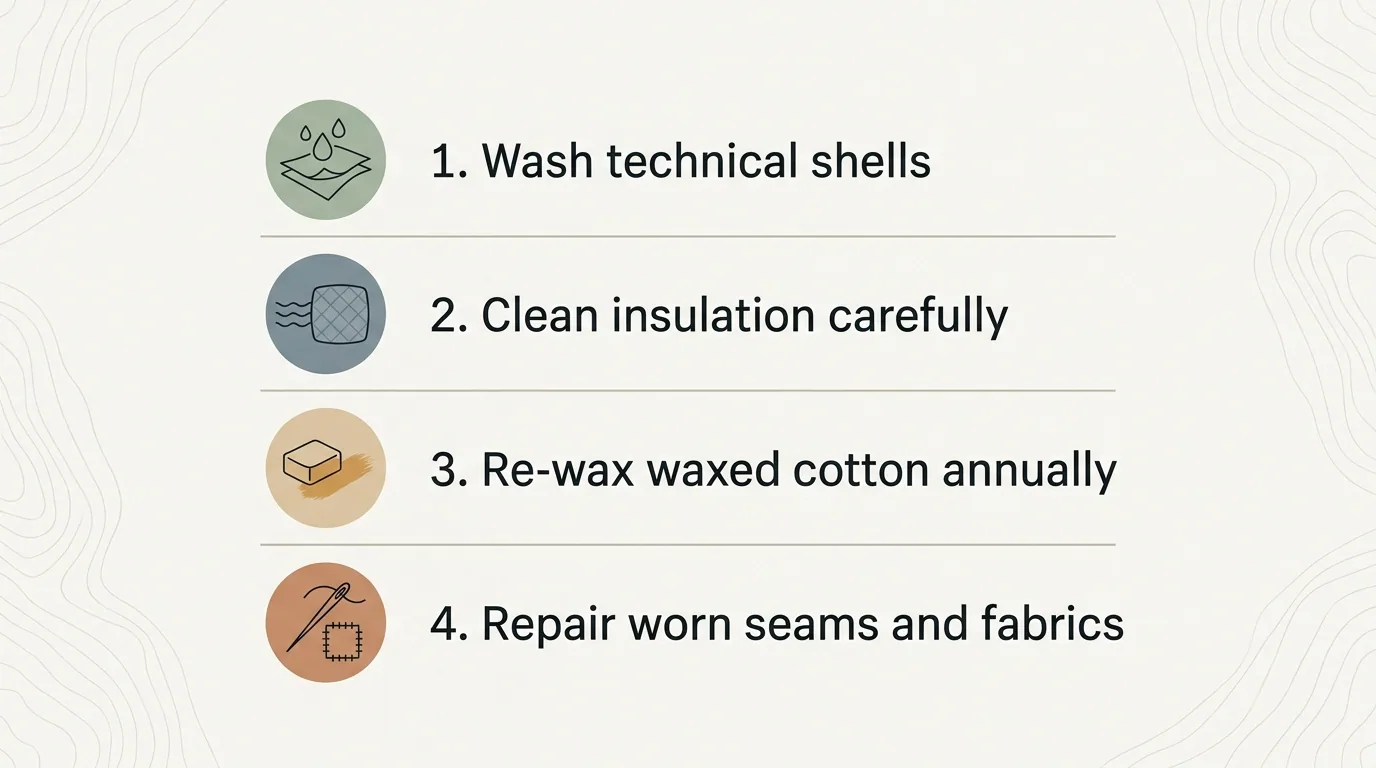
- Wash technical waterproof shells periodically: Dirt, sweat, and skin oils clog waterproof-breathable membranes and impair surface water beading. Following dedicated hardshell cleaning guidance keeps 2-layer, 2.5-layer, and 3-layer garments breathing and shedding rain across multiple seasons.
- Clean down and synthetic insulation carefully: Both down and synthetic insulated jackets benefit from proper washing to restore loft and breathability. Manufacturer resources such as the Rab Lab provide step-by-step washing and repair guidance tailored separately to down jackets, hydrophobic down, and synthetic PrimaLoft® pieces, helping you avoid clumping or fabric damage.
- Re-wax waxed cotton annually: Classic 6oz waxed cotton is naturally hardwearing but performs and lasts even better when re-waxed every year, while Lightweight 4oz finishes similarly reward routine care. You can apply reproofing at home using a Barbour Wax Care Kit or send the jacket to Barbour’s South Shields workshop for professional Repair & Re-Wax restoration.
- Repair worn seams and fabrics early: Addressing small tears, frayed cuffs, or damaged baffles promptly prevents minor wear from turning into full replacement. Technical fabric makers such as Pertex publish dedicated Care and Repair guidance, Rab Lab outlines down-jacket repair steps, and Barbour’s Repair & Re-Wax and Re-Loved services extend waxed garments across generations.
Frequently Asked Questions
What is the difference between a rain shell and a technical hardshell for UK weather?
A general rain shell is designed to keep rain or snow off your body during stationary or casual outdoor activities, such as commuting at an easy pace or watching an outdoor event. A technical hardshell is built to be both waterproof and breathable so it can manage external rain and internal perspiration during sustained, higher-output activity like hillwalking, climbing, or wet-weather trail running.
How often should a 6oz or 4oz waxed jacket be re-waxed to maintain water resistance?
Barbour recommends re-waxing Classic 6oz waxed cotton every year to keep its hardwearing finish performing over the long term, and Lightweight 4oz waxed cotton—which weighs around three-quarters of the classic weight—also benefits from regular reproofing and care. You can re-wax at home with a DIY Wax Care Kit or use Barbour’s specialist Repair & Re-Wax service in South Shields.
Should I choose down or synthetic insulation under a waterproof shell in damp UK conditions?
Down jackets are not waterproof, so in damp UK conditions or active stop-start outings under a shell, synthetic insulation such as PrimaLoft® is often the more practical choice because it is lightweight, breathable, and fast-drying. Standard or hydrophobic down remains well suited to colder, drier periods or stationary breaks when reliably protected beneath a waterproof shell.
Are waterproof membrane road-to-trail trainers always better for wet UK commutes and runs?
Not always. Waterproof-membrane uppers help keep out light rain, wet grass, and road spray during cooler commutes, but they can run warmer during sustained effort and dry more slowly if water gets in over the collar. Breathable non-membrane mesh uppers let heat escape more easily and drain faster after deep puddles, making them a strong option for higher-output UK runs across tarmac, towpaths, and parks.
Sources
Related reading
- Best UK Technical Outerwear & Running Footwear: evidence-led top choices
- Rab vs Mammut: which is the better fit
- How UK Technical Outerwear & Running Footwear should fit, feel, and perform
- When to buy UK Technical Outerwear & Running Footwear for better value
Editorial information: About our editorial team · Read our editorial policy · Read our affiliate disclosure.