
How Value Works for UK Technical Outerwear and Running Footwear
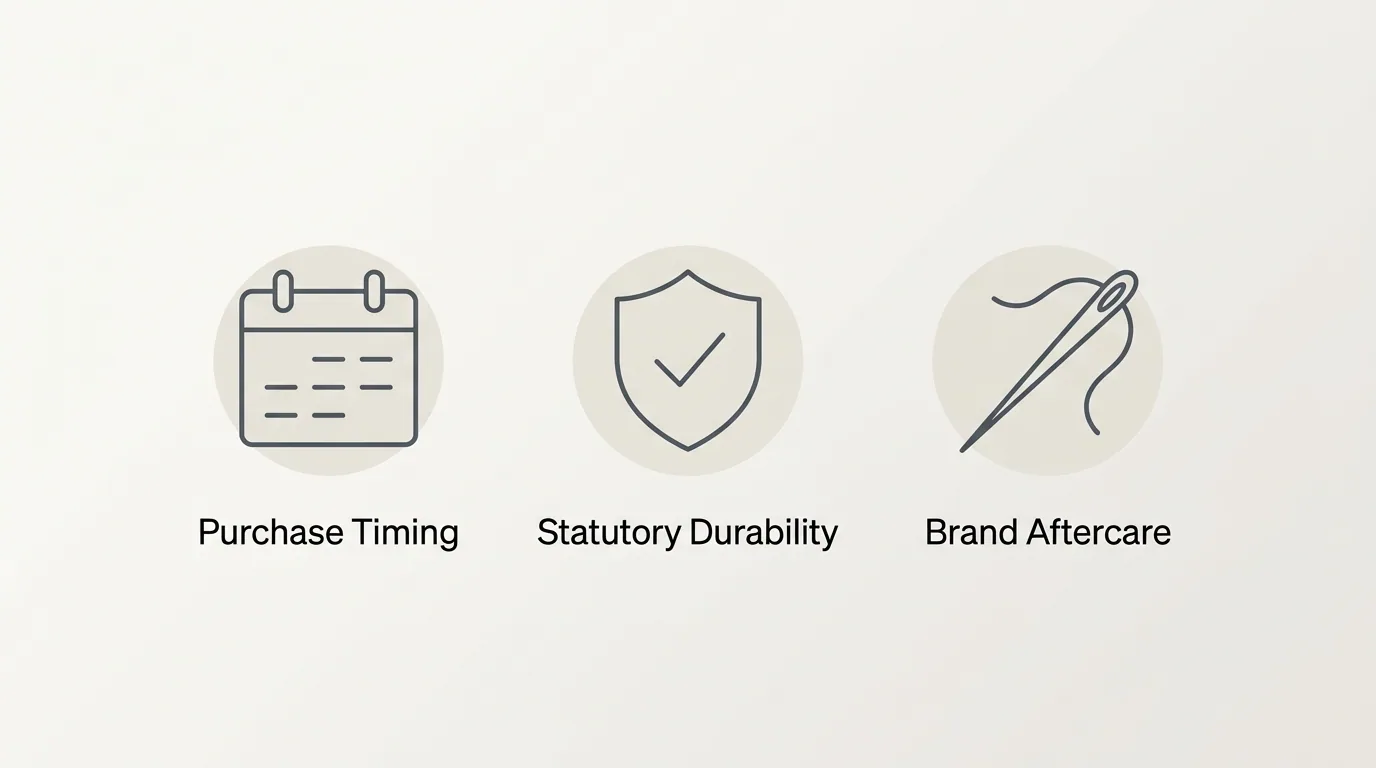
A lower ticket price rarely tells the full story when buying technical waterproof shells, waxed jackets, or road-to-trail running footwear in the UK. Genuine long-term value depends on cost-per-wear across wet commutes, trail miles, and multiple seasons of regular use. Three pillars shape that equation: purchase timing, statutory durability standards, and brand-backed aftercare.
Under the Consumer Rights Act 2015, goods bought in the UK must be fit for purpose, as described, and of satisfactory quality. Durability is a core part of satisfactory quality, judged by what a reasonable person would expect given the item's price tier and how well it has been looked after. A budget item is not held to the same longevity benchmark as a higher-priced technical garment, whereas a premium piece that has been properly cared for and fails prematurely may fall short of the durability standard.
Alongside statutory protection, manufacturer aftercare programmes directly influence ownership economics. Brands that run in-house repair centres, provide home maintenance guidance, and back their products against manufacturing defects during their usable lifetime help extend service life rather than forcing early replacement. Official re-waxing and repair services for waxed jackets serve the same purpose, keeping outer fabrics weather-resistant over years of wear.
This guide brings those elements together for UK runners, commuters, and everyday shoppers. It covers how to time seasonal purchases without losing consumer protection, how warranty and repair pathways improve long-term value, how online and in-store return rules compare for fit-sensitive gear, and where statutory rights and warranties stop.
Seasonal Buying Windows and Price Timing in the UK
Timing a purchase around end-of-season colourway transitions and off-peak demand is a practical way to manage upfront spend on technical shells, insulated layers, waxed jackets, and road-to-trail running shoes. Because core construction and fit often remain consistent across colour updates, buying outside peak weather demand lets shoppers prioritise proper sizing and durability rather than settling for a lower-grade alternative at full price.
Crucially, buying during a seasonal promotion or clearance event does not weaken UK statutory quality protections. Under UK law, retailers must still offer a full refund if an item is faulty, not as described, or does not do what it is supposed to do. It is illegal for a retailer to restrict or remove those statutory rights or mislead customers about them—for example, by displaying a sign stating that sale items cannot be returned or refunded. Discounted outerwear and footwear remain subject to the Consumer Rights Act 2015 requirements that goods be fit for purpose, as described, and of satisfactory quality.
Where seasonal buying channels differ sharply is on change-of-mind returns. Ordering a reduced jacket or pair of running shoes online, by phone, or by mail order from a UK retailer still carries the automatic 14-day distance-selling cooling-off period, even when nothing is wrong with the item. By contrast, picking up a clearance item in a physical UK shop carries no automatic legal right to a refund if you later decide the size, cut, or colour is not right; any exchange or refund depends solely on the store's voluntary returns policy. Checking that distinction before buying in a sale prevents a discounted purchase from turning into an unreturnable wardrobe mistake.
Warranty Economics and Brand Repair Value
AI-generated generic editorial illustration — not a retailer product photo and does not depict the reviewed product or service. Editorial illustration supporting this section.
When comparing two technical jackets or waxed coats, an item with structured brand aftercare can deliver stronger long-term value than a cheaper alternative designed for disposal once a zip, seam, or proofed finish wears down. Official maintenance, repair, and warranty programmes reduce the risk of writing off an entire garment because of a fixable fault or routine surface wear.
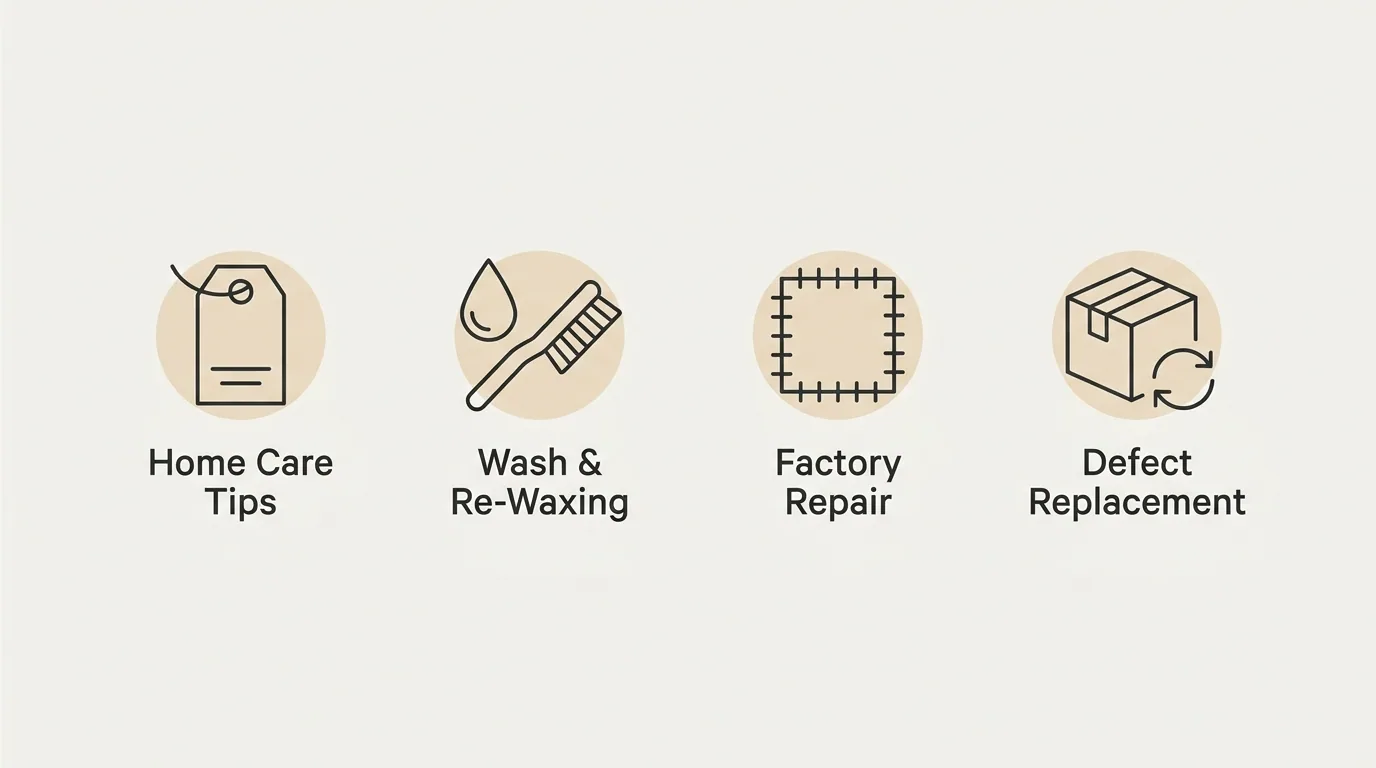
Rab's Rab Promise illustrates how a multi-layered aftercare framework supports long-term ownership. First, it offers gear advice and how-to tutorials through Rab Lab, covering home and field maintenance tips, seam construction guidance, and field repairs using easily obtainable spare parts. Second, its in-house Service Centre handles damaged garments, missing parts, and thorough washes to restore performance and return kit promptly. Third, the Rab Warranty covers manufacturing defects during an item's usable lifetime, providing a factory-approved repair or a replacement where a repair is not possible.
Waxed outerwear relies on similar maintenance economics. Barbour UK operates a dedicated Repair and Re-Wax customer service pathway alongside its standard delivery and returns support. Rather than retiring a waxed jacket when the finish thins or panels show wear, shoppers can use an official reproofing and repair route to extend the garment's working life.
These brand-backed programmes sit alongside, rather than replace, the Consumer Rights Act 2015. Statutory law sets the baseline that goods must be of satisfactory quality and reasonably durable for their price tier when well cared for, while manufacturer repair centres and lifetime-defect warranties provide practical pathways to keep well-built outerwear in service for longer.
Where Statutory Return Rights and Warranties Have Limits
AI-generated generic editorial illustration — not a retailer product photo and does not depict the reviewed product or service. Editorial illustration supporting this section.
Understanding the boundaries of UK consumer law and manufacturer warranties is just as important as knowing your protections. Several common assumptions can quickly erode expected savings on outerwear and footwear.
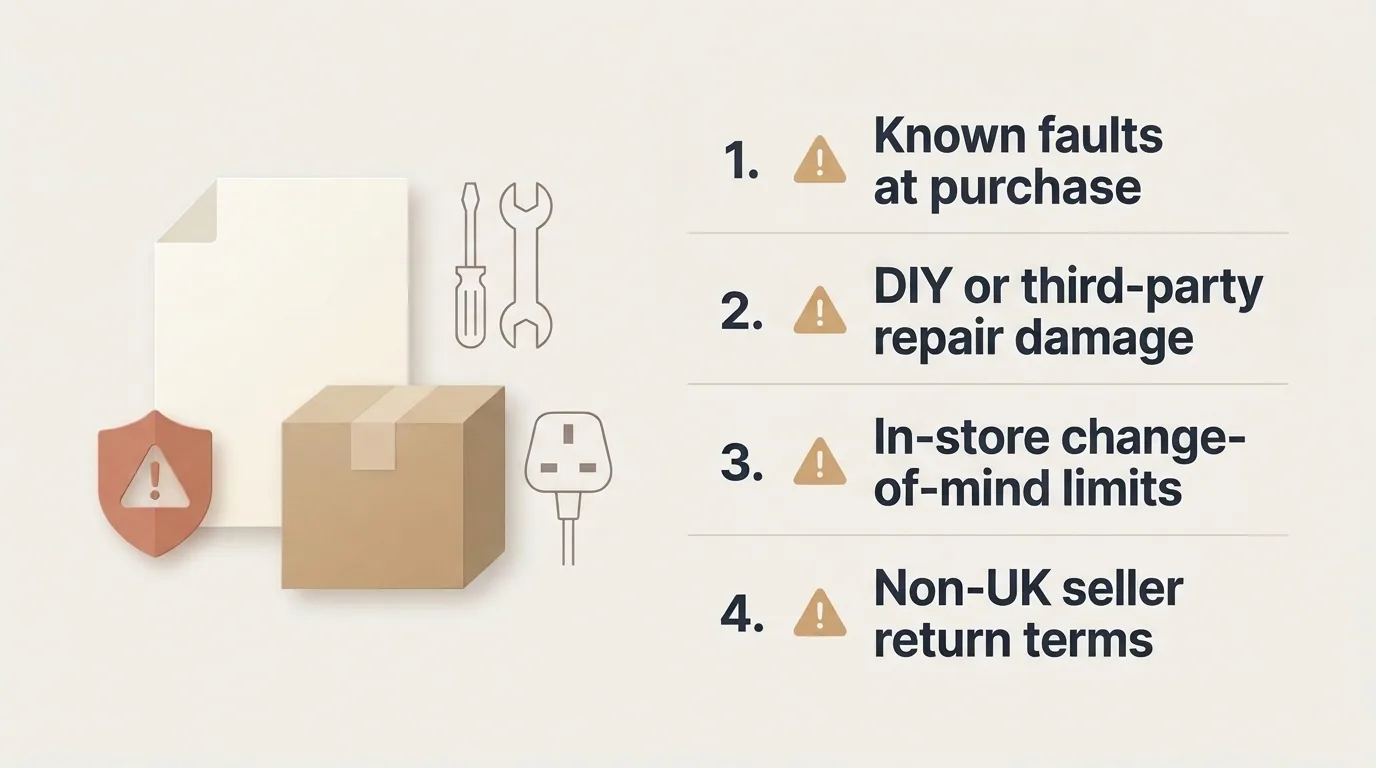
First, in-person shop purchases carry no automatic statutory right to a refund for change of mind, wrong size, or wrong colour, regardless of how expensive the garment or shoe was. That remains true even if you could not try the item on before paying—for example, if changing rooms were closed. Unless the item was bought without seeing it, a shop is not legally obliged to accept a change-of-mind return.
Second, retailers do not have to refund an item if you knew it was faulty when you bought it, or if you damaged it by attempting a DIY repair or using a third party to repair it (although you may still have a right to a repair, replacement, or partial refund in some situations). For online orders, retailers cannot deduct fees from a valid cancellation refund, but they can reduce the refund if the item has been used beyond normal shop-like handling or damaged—such as running outdoors in new trail shoes before deciding to return them.
Third, manufacturer warranties such as the Rab Warranty apply to manufacturing defects during a product's usable lifetime, not ordinary wear-and-tear. Likewise, under the Consumer Rights Act 2015, durability expectations scale with price tier and reasonable care, so an inexpensive item that wears out after several years will not be judged like a premium piece failing early.
Finally, buying from a company based outside the UK can change your return rights. Before ordering from an overseas retailer, check its terms and conditions to confirm whether returns are accepted, who pays return postage, and whether original delivery charges are refunded.
Comparing Online and In Store Purchase Rights for Fit Sensitive Gear
Road-to-trail running shoes and technical waterproof shells are particularly fit-sensitive: toe-box volume, heel lock, sleeve length, and layering room often determine whether gear gets worn for years or sits unused. Choosing between online and in-store buying directly affects your return leverage if the fit is wrong.
UK distance-selling rules give online, mail-order, and telephone shoppers a clear statutory timeline for change-of-mind returns:
- 14 days to cancel: You have 14 days from receiving the item to tell the retailer you want to cancel, without needing to give a reason.
- 14 days to return: Once you have notified the retailer, you have a further 14 days to send the item back.
- 14 days for the refund: The retailer must refund you within 14 days of receiving the returned item.
Delivery refund rules are equally specific. If you paid for standard delivery on an online order and cancel within the cooling-off period, the retailer must refund that standard delivery charge. If you paid extra for a faster or more expensive shipping option, the retailer only needs to refund the cost of standard delivery, leaving you to absorb the upgrade difference.
In a physical UK shop, you can check sizing immediately, but you give up the automatic 14-day cooling-off right. Many high-street and specialist outdoor shops voluntarily allow returns within 14 or sometimes 30 days for unused items, though terms vary. Check the policy printed on your receipt, listed on the retailer's website, or confirmed by the local branch, and keep both the receipt and original packaging to give yourself the strongest chance of a smooth return. Note that Citizens Advice publishes dedicated consumer guidance for England alongside separate pages for Northern Ireland, Scotland, and Wales.
Step by Step Buying and Aftercare Checklist for UK Shoppers
AI-generated generic editorial illustration — not a retailer product photo and does not depict the reviewed product or service. Editorial illustration supporting this section.
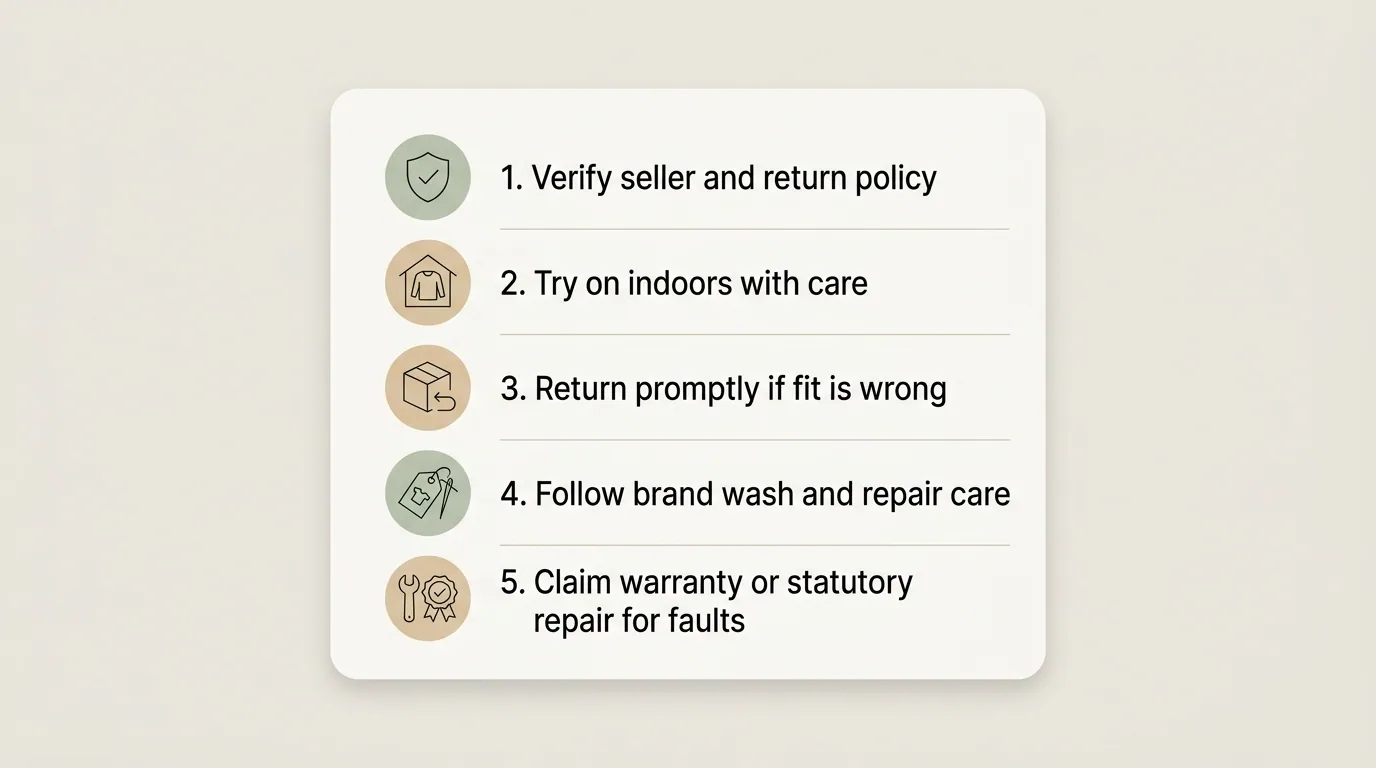
Use this five-step sequence to protect both your budget and your return rights before and after buying technical outerwear, waxed jackets, or running footwear:
- Verify the seller and return policy before checkout. Confirm whether the retailer is UK-based or overseas. If buying from abroad, check the seller's terms on return eligibility, return postage costs, and original delivery refunds. If buying in a UK shop, check the voluntary 14-day or 30-day return policy before paying. Where longevity matters, also check whether the brand offers official aftercare such as the Rab Service Centre or Barbour UK's Repair and Re-Wax service.
- Try gear on indoors with shop-like care. For online orders, you are entitled to handle items as you would in a shop—taking shoes out of the box and trying jackets on over clean layers—but avoid outdoor test runs or removing essential packaging until you are certain of the fit, as use or damage can lead to refund deductions.
- Act promptly if the fit is wrong. For UK distance sales, notify cancellation within 14 days of receipt and return the item within 14 days of notifying. For in-store purchases, return unused items with the receipt and original packaging within the shop's stated window.
- Follow brand wash, care, and repair guidance. Use official maintenance resources such as Rab Lab tutorials, in-house wash and repair services, or official re-waxing pathways rather than risky DIY repairs that could complicate statutory refund rights.
- Escalate premature faults through warranty or statutory routes. If a well-cared-for item fails early due to a manufacturing defect or fails to meet satisfactory quality standards, weigh the brand's warranty repair or replacement pathway alongside your Consumer Rights Act 2015 rights against the retailer.
Frequently Asked Questions
Can I return running shoes or a jacket bought online in the UK after trying them on indoors?
Yes. Under UK distance-selling rules, you automatically receive a 14-day cooling-off period from the day you receive an online, phone, or mail-order item, and you do not have to give a reason to cancel. You are allowed to handle the item in the same way you would in a shop—such as taking shoes out of the box and trying them on indoors, or checking a jacket's fit. However, if the item is used beyond shop-like handling or damaged, the retailer may deduct money from your refund. Once you notify the seller within 14 days, you have another 14 days to send the item back, and the seller must refund you within 14 days of receiving it.
Do UK retailers have to refund my delivery fee if I cancel an online order?
For UK distance sales cancelled within the statutory cooling-off period, the retailer must refund the cost of standard delivery if you paid for it. If you chose a more expensive expedited shipping option, the retailer only has to refund the equivalent standard delivery charge, not the extra upgrade fee. If you bought from a company based outside the UK, delivery and return postage rules may differ, so check the seller's terms and conditions before ordering.
Do I have an automatic right to a refund if I buy the wrong size in a UK shop?
No. When you buy in person from a UK shop, there is no automatic legal right to a refund if you change your mind or pick the wrong size or colour, regardless of price—even if changing rooms were closed. Many shops voluntarily offer 14-day or 30-day returns for unused items, so check the receipt, website, or branch policy and keep the receipt and original packaging.
How do manufacturer warranties and repair services like Rab or Barbour fit alongside the Consumer Rights Act 2015?
Brand aftercare programmes complement rather than replace UK statutory law. Under the Consumer Rights Act 2015, retailers must supply goods that are fit for purpose, as described, and of satisfactory quality, including reasonable durability for their price tier. Manufacturer programmes—such as the Rab Promise covering Rab Lab maintenance advice, in-house Service Centre wash and repair, and warranty repair or replacement for manufacturing defects during usable lifetime, or Barbour UK's Repair and Re-Wax service—give shoppers practical routes to maintain and repair gear over time.
Sources
Related reading
- Best UK Technical Outerwear & Running Footwear: evidence-led top choices
- Barbour review: practical buying assessment
- How to choose UK Technical Outerwear & Running Footwear for your needs
- How to identify genuine UK Technical Outerwear & Running Footwear deals
Editorial information: About our editorial team · Read our editorial policy · Read our affiliate disclosure.